Temporary exhibition

Birds on the Frontline of Climate Change

– How Warmer Spring Temperatures Are Shifting Migratory Birds’ Arrival Times at Ottenby

Ottenby Bird Observatory’s Unique Data Collection
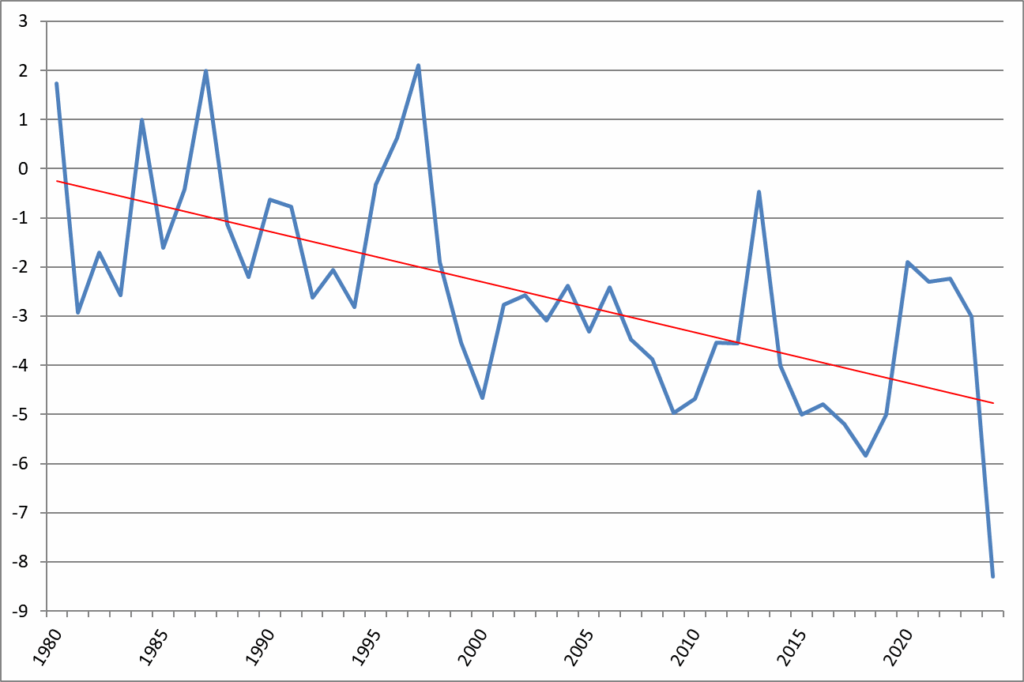
In 2024, three records were broken at Ottenby Bird Observatory. Barn Swallows, Pied Flycatchers, and Common Redstarts were all ringed earlier than ever before. In fact, migratory birds monitored at Ottenby arrived on average 8.3 days earlier in 2024 compared to when the observatory started collecting data in the late 1970s. This data has been collected through the world’s longest uninterrupted standardized bird monitoring program, now containing information on over 1.4 million individual birds.


The data shows a clear trend: birds arrive earlier in Ottenby to match the earlier arrival of spring. Compared to when arrival times were first recorded in the 1970’s, spring migration has now advanced by nearly five days on average. But the question remains whether this shift is enough for the birds to also adjust their breeding to match other seasonal changes in nature. This exhibition explores how migratory birds from distant countries or continents attempt to synchronize their arrival with the Northern European spring — and what happens if they arrive too late.

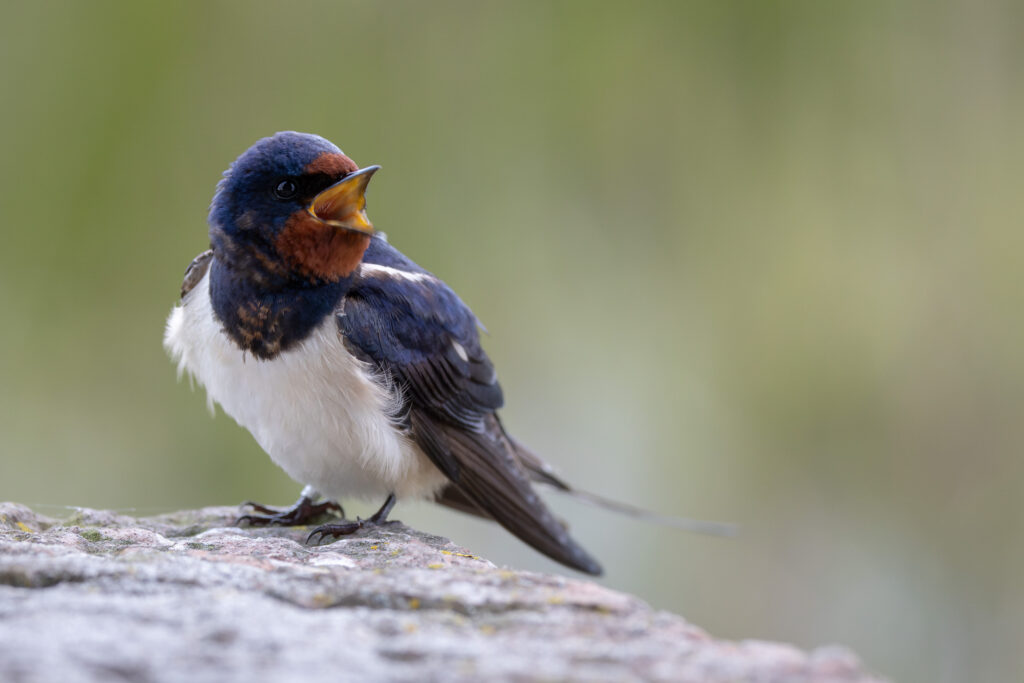
Barn Swallow. Text and photo: Gabriel Säll / naturum Ottenby.
The indicator’s variation (with red trend line) during the measurement period 1979–2024. The trend line shows that migratory birds are now expected to pass on average 4.8 days earlier than in 1979. Source and graphics: Magnus Hellström / Ottenby Bird Observatory.

The Motivation to Travel Far
Mosquitoes swarming, caterpillars dangling in masses, and spiders all over are signs of the Swedish summer. Migratory birds know this and it motivates them to fly far distances to breed. As parents, they aim to give their offspring the best possible start in life during the summer months. But not all species have the same conditions. Some migrate only from southern to central Sweden, while others journey all the way from tropical Africa to northern Sweden!

Short- and Long-Distance Migrants
Each autumn, most bird species leave Sweden. Insect-eating species especially must find new hunting grounds when temperatures drop. Birds know how far they need to travel. While short-distance migrants, like the Wren, might spend the winter in southern Sweden, long-distance migrants, like the tiny 7-gram Willow Warbler, travel as far as tropical Africa. Regardless of the distance, all these birds strive to return to the Swedish nature again next year, as spring begins to bloom.

Phenology – Nature’s Annual Cycle
Phenology is the scientific study of seasonal natural changes. Bird migration is a part of spring’s phenology, just like the trees budding and fish spawning. Recording bird arrivals at Ottenby in spring and autumn has been a core part of the observatory’s environmental monitoring since its beginning.

Spring Migration is Faster
Short-distance migrants tend to arrive earlier during spring- unsurprising, since their winter climate resembles Sweden’s and they have less far to travel. As soon as the cold retreats, they begin their journey north. Early arrival increases chances of securing good territories, with ample food and suitable conditions for raising young. But being early carries risks; a sudden weather change can make food hard to find, sometimes fatally so. However, as the climate warms, such setbacks are becoming rarer. If early arrival consistently brings benefits, more birds will adjust their migration schedule.

Long-distance migrants like the Willow Warbler, Redstart, and Whinchat — wintering in tropical Africa — have also advanced their arrival by about a week. These birds cannot predict Northern European weather when leaving Africa. . What takes time during bird migration isn’t the flight itself, but the time birds must spend searching for food. More food means a quicker trip. There’s another theory as well: migration behaviour — timing, direction, destination — is often genetically inherited. Small insect-eaters often reach sexual maturity within their first year, which allows for relatively quick behavioural adaptations to a changing climate.

Different Reactions to an Extended Summer Season
Data from Ottenby shows a clear trend: spring migration is happening earlier. In autumn, birds have also adapted to the extended Swedish summer, but they do so in two very different ways.

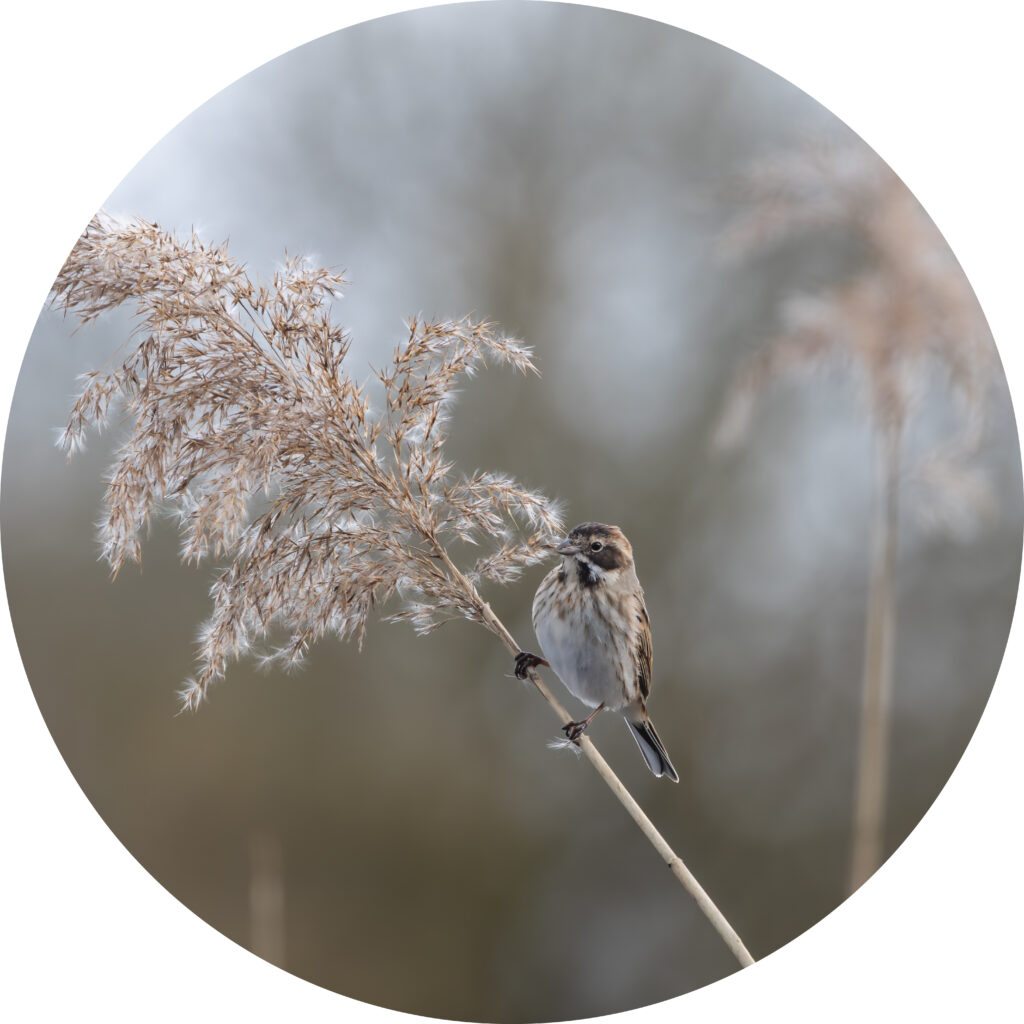
Short-distance migrants, like Reed Buntings, often take advantage of the extended season to raise an extra brood, delaying their departure by several weeks compared to historical averages.

Long-distance migrants, like Redstarts, are influenced by multiple factors such as food availability in transit countries and seasonal shifts. They also need time to molt in their wintering areas, so arriving on time is critical. Their tight schedule leaves no room for extra broods. Arriving earlier in spring also means they can finish breeding earlier and depart earlier in autumn.

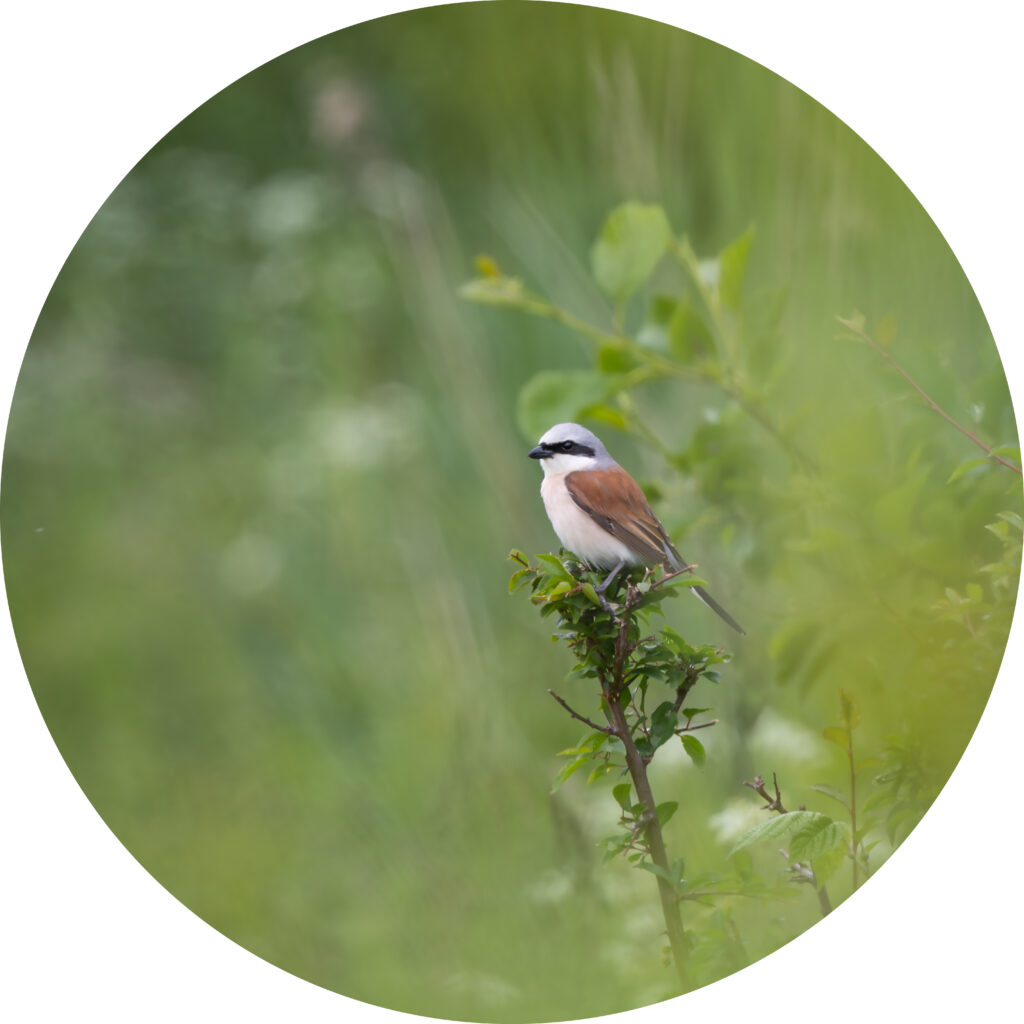
Red-backed Shrike.
Reed Bunting.

Mismatches – Pied Flycatcher
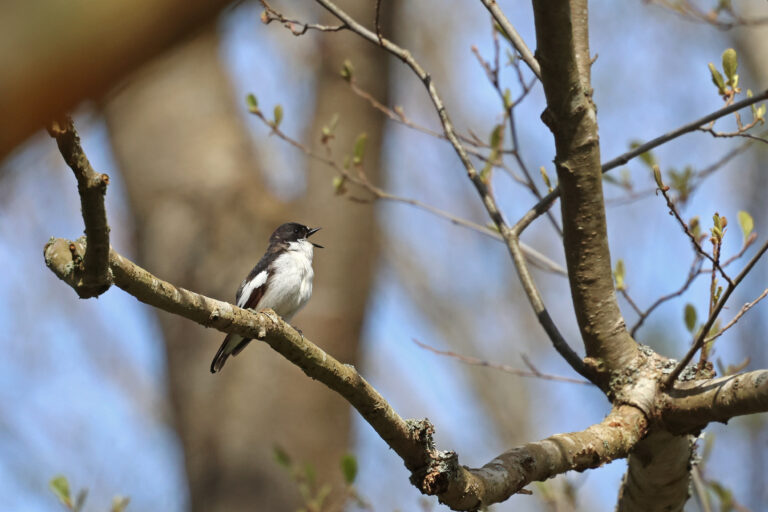
Each spring, millions of Pied Flycatchers migrate from tropical Africa to their breeding grounds in Northern Europe. In recent decades, like many others, they’ve begun migrating earlier to match the earlier springs.

A Dutch research group found that flycatchers in oak and deciduous forests suffer when spring warmth arrives early. Historically, these forests provided abundant caterpillars just as chicks were being raised. But caterpillars are only available for about three weeks and their development now happens earlier than the birds’ breeding.

This mismatch leads to undernourished chicks with lower survival rates. As a result, flycatchers are abandoning what were once ideal habitats. Flycatchers nesting in mixed forests (deciduous and coniferous) cope better, as they can utilize a broader range of insects. It is not yet clear if abandonment of deciduous forests is a major factor in the species’ overall population decline, but since the 1980s, pied flycatchers have decreased globally.

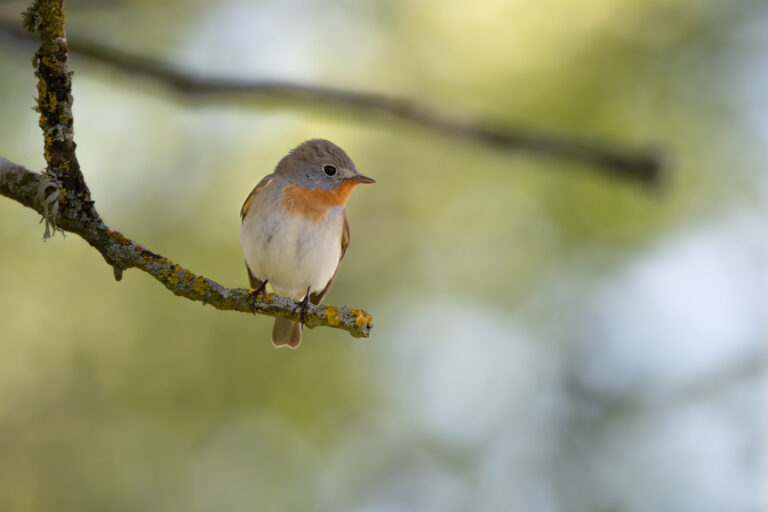
Pied Flycatcher.
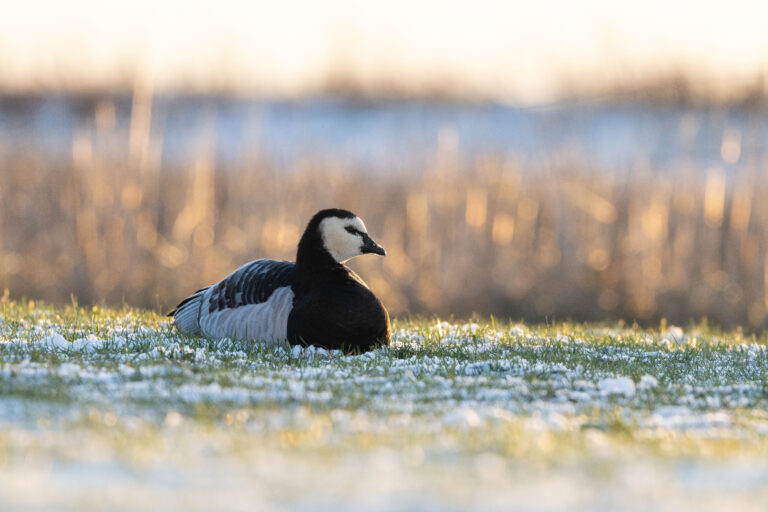
Barnacle Goose.

Mismatches – Barnacle Goose

It’s not only insect-eaters that migrate long distances. Even grazers like the Barnacle Goose fly up to 3,000 km from their wintering grounds in the Netherlands to breeding grounds in the Arctic. Their goal is to arrive just as the snow melts on the Russian tundra. Eggs are laid soon after, with chicks hatching about a month later — precisely when new grass should be abundant.

With a warming climate, snowmelt in the Arctic advances by about one day per year. From their wintering grounds, the geese can’t predict snows melting time. Therefore, they depart from Western Europe at the usual time, but during flight, if they sense spring has progressed, they adjust, skipping rest stops and flying longer daily distances. They now arrive on average 13 days earlier.

Still, the geese can’t lay eggs immediately. The exhausted females must regain physical strength first, delaying egg-laying. This means chicks hatch after the peak of nutritious new grass, leaving them weaker with lower survival rates.

Researchers have observed geese laying more eggs to compensate for higher chick mortality. But quickly adjusting egg production isn’t biologically feasible, and, so far, barnacle geese haven’t successfully adapted to climate changes in the Arctic.

Species Range Shifts Northward

Several European studies clearly show that bird species favouring warmth are becoming more common in Northern Europe as temperatures rise. At the same time, species preferring cooler climates are, in general, declining.

These shifts are not always obvious, since they often involve changes in abundance of already-present species. But sometimes the change is clear, such as when entirely new species arrive. Since 2000, several species have crossed the Baltic Sea and started breeding in Sweden, such as the Firecrest, Short-toed Treecreeper, European Stonechat, European Serin and Great Egret. It is likely that more species will follow in the coming years.

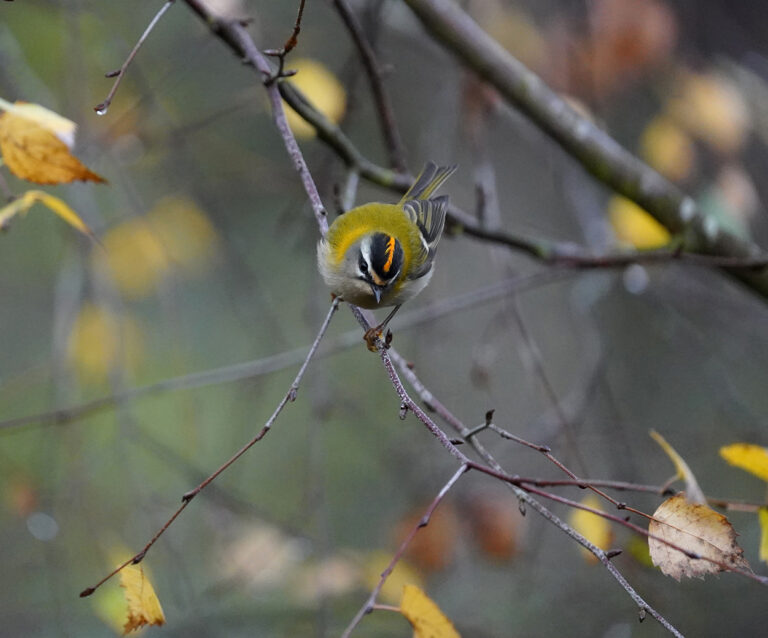
The Firecrest was first discovered in Sweden in 1952 during bird ringing at Ottenby. Today, around 20 individuals are ringed annually and several pairs now breed in southern Sweden.

Firecrest.

Northern bird species are being displaced

Although birds have shown remarkable adaptability in shifting their migration patterns in response to climate change, species that depend on colder climates face greater challenges.

In the northernmost parts of the hemisphere, birds have increasingly limited habitats.
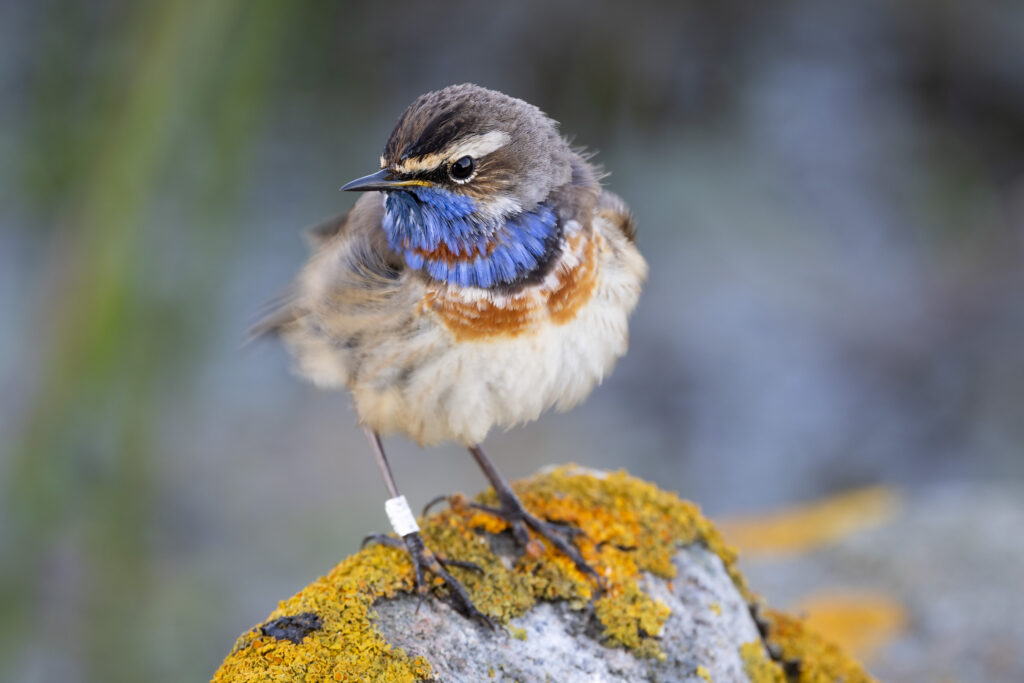
At Ottenby, northern species like the Bluethroat, Lapland Bunting, and Shore Lark have become rarer in recent years. It’s too early to pinpoint the exact cause, but the trend is clear:
Cold-adapted species are declining, while warmth-loving species are increasing at Ottenby and across Sweden.

Bluethroat.

Read more about how climate change affects migratory birds

The Earth’s natural environments are currently changing rapidly as a result of a warming climate. Data collected by Ottenby Bird Observatory has helped shed light on how several bird species have altered their migration patterns to adapt to these changes. As the climate continues to warm, many habitats that are crucial for birds’ food supply and breeding opportunities are shrinking. If you would like to learn more about this topic, we have provided links here to all the sources used in the production of this exhibition.

sv_SESwedish
Om cookies

Här kan du läsa mer om vilka cookies som sätts.

Funktionella

Funktionella cookies kommer från den aktuella webbplatsen (naturumottenby.se) och placerar ut cookies i besökarens webbläsare. Funktionella cookies hjälper dig att göra hemsidan användbar, genom att aktivera grundläggande funktioner och spara de val du gör. Funktionella är alltid aktiverade så att webbplatsen kan fungera så optimalt som möjligt.

[moove_gdpr_popup]
Denna cookies ställs in av GDPR Cookies Compliance. Cookien används för att lagra användarens cookieinställningar.
Sätts av: naturumottenby.se
Varaktighet: 365 dagar

[elementor]
Denna cookies ställs in av Elementor. Cookien används för att visa sidan med rätt design och utseende.
Sätts av: naturumottenby.se
Varaktighet: Beständig

[wp-api-schema-model*]
Denna cookies ställs in av Wordpress.
Sätts av: naturumottenby.se
Varaktighet: 1 session